
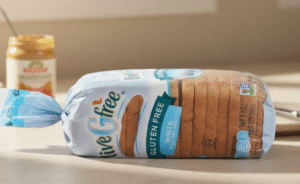

If you are looking for a straight answer, yes, Aldi gluten free bread is worth trying. It holds together better than many other gluten free options, tastes close to regular bread, and is easy on the wallet. For a packaged gluten-free bread, it works fine, but it won’t completely replace the bakery-style loaf that fills your home with the aroma of fresh yeast.
Let me clarify what I mean now. People have been let down by gluten-free bread in the past. It tastes like cardboard, crumbles when butter is poured on it, or has a price tag that makes you wonder what you’ve chosen in life. Aldi addressed this issue by developing their own line of gluten-free products, which includes bread that genuinely has the texture of bread. A slice does not crumble in your hands when you pick it up. It’s already a victory.
Aldi Gluten Free Bread
The texture is the first thing you notice. Before you even open the bag, a lot of gluten-free loaves are dry or stiff. Aldi Gluten Free Bread has a softer, more malleable texture. A slice won’t break if you bend it. You already know that this isn’t always the case if you’ve tried other brands.
Another important one is taste. Both sweet and savory toppings work well with Aldi gluten free bread because of its mild flavor. It has a soft center and a subtle crunch when toasted. You want a bread that doesn’t compete with your fillings, and this one doesn’t. It serves as a kind of background music, allowing the cheese or peanut butter to shine.
Feeling overly dense or weighty is one of the reasons people steer clear of gluten-free bread. It’s lighter. Making a sandwich doesn’t have to feel like breaking through a block. It is easy to utilize the slices for lunchboxes or quick meals because they are uniformly sized and neither overly thick nor thin.
Let’s now discuss the cost. Gluten-free products are frequently more expensive and belong to a separate category. Compared to most major brands, Aldi gluten free bread is less expensive. It still costs more than regular wheat bread, but that’s to be anticipated. The value is evident when compared to other gluten-free breads. It’s affordable and doesn’t feel like a luxury purchase for avoiding gluten.
The packaging is straightforward but useful. It preserves the bread for a fair amount of time. It tastes best when toasted or consumed within a few days of opening, just like the majority of gluten-free bread. Freezing is also effective. It keeps well after toasting, and you may take out a piece or two as needed.
Aldi gluten free bread is comparable to other comparable products in terms of nutrition. It doesn’t feel excessively processed and has a good balance of fiber and carbohydrates. It is the kind of bread you need if you want to follow a gluten-free diet without making your meals more difficult.
Reliability is the most notable feature. Depending on the batch, a lot of gluten-free loaves are inconsistent. It’s good one week, then it breaks down the next. Aldi Gluten Free Bread has consistently high quality. When you rely on it for your everyday meals, that is a relief.
Additionally, there are a few types. While the plain version is straightforward and adaptable, the multiseed version offers you more texture and a nutty flavor. Depending on your preferences, either works well. While the plain is excellent for toast with jam, some people prefer the multiseed for sandwiches.
I tried it with grilled cheese, fried eggs, and spreads. It held up each time. I was very surprised by the grilled cheese. The insides melted perfectly, and the slices crisped without burning. Gluten-free bread typically fails the test, but this one passed.
It’s not flawless now. You will notice that it does not taste exactly like wheat bread if you eat it without toasting. The crust is not as rich, and the chew is a little different. It will never be able to replicate a bread from a bakery. But Aldi’s gluten-free bread is a considerably better option than the typical store-bought kind.
See also: Aldi gluten free stuffing
Convenience is also important. Since there are Aldi stores all over the place, finding this bread is simple. You don’t have to spend more time looking for a specialty store. It’s located in the bread aisle’s gluten-free section. Since gluten-free food already restricts your options, you will appreciate the effort savings.
Freshness is another important factor to consider. Some gluten-free breads have the texture of bread that was shipped across the nation months ago. Aldi Gluten Free Bread Feels More Fresh. The suppleness of the slices and their flavor will inform you. It doesn’t start out stale, but toasting still helps.
It’s easy to store. You can store bread in the pantry and consume it in a few days if you eat it every day. Otherwise, the freezer option is a good choice. Take anything you need, put it in the toaster, and it will resurrect. Because of its adaptability, it is useful in homes with just one or two gluten-free members.
Bread is one of the most difficult foods to substitute for people with celiac disease or gluten sensitivity, who frequently need dependable staples. Without making you feel like you’re giving up too much, Aldi Gluten Free Bread provides that essential. You can make a stress-free quick snack, have toast for breakfast, or take sandwiches for work.
In a competitive gluten-free market, its reasonable price, consistency, and good flavor set it apart. It may not impress someone who regularly consumes traditional sourdough, but that is not its intended use. It is intended for those who require an easy-to-follow gluten-free solution. In that regard, it is successful.
Aldi gluten free bread is dependable, reasonably priced, and sufficiently delicious to become a regular part of your diet. Although it won’t permanently alter your perspective on bread, it will provide you with something you can use without complaining. And that is significant in the world of gluten-free living.