
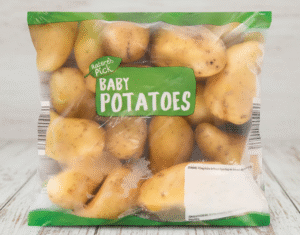

The Aldi baby potatoes recall was announced because of a food safety concern. When it was determined that certain batches of potatoes might not fulfill quality standards, they were removed from the shelves.
In other words, you were encouraged to inspect and return any bags that were in your kitchen for a refund. Food recalls occur more frequently than most people realize, yet they receive immediate notice when they include something as popular as baby potatoes. Nobody anticipates a caution with their side dish.
You hesitate before putting them in the oven when you hear the words “aldi baby potatoes recall.” Potatoes have a harmless feel. They appear tiny and naive as they sit there. You give them a good wash, roast them, and hope for the best. Dinner suddenly seems less tempting after you learn that they were involved in a recall. It’s similar like discovering a bruise inside an apple after biting into it. Even though you did nothing wrong, the trust is temporarily lost.
Aldi Baby Potatoes Recall
Taste or appearance were not factors in the Aldi baby potatoes recall. It has to do with safety. When there is even a possibility of contamination, grocery retailers must take immediate action. The purpose of a recall is to safeguard consumers before an issue worsens. In the end, responding quickly is preferable to ignoring the problem and hoping no one notices.
Hearing about recalls can make people anxious, as though all of the food in the house is now questionable. Recalls are actually an indication that the system is functioning properly. It indicates that testing found something and that something was done about it. An illustration of how a routine check can reduce risk is the Aldi baby potatoes recall. The story might have turned out quite differently if nothing had been done.
The Aldi baby potatoes recall served as a warning to consumers to read labels and packaging carefully. The warning identified the impacted bags, typically by supplier, size, or barcode. You could return it for a complete refund if your bag matched. No inquiries were made. That’s the norm. Stores are aware that a successful recall restores customer trust.
There were some who had to check their pantries twice. Others dismissed it, believing they had already consumed half of the bag without any issues. That’s the challenging aspect of recalls. Even if you don’t have any symptoms, you still run the danger. Returning the merchandise is the safest course of action, even if it seems inconvenient. One of those instances where exercising caution was more important than using up what had already been purchased was the Aldi baby potatoes recall.
See also: Aldi baby spinach recall
Someone could be extra cautious the next time they purchase as a result of the Aldi baby potatoes recall. You could begin to pay closer attention to labels or question where fresh product comes from. Even what you put in your cart may alter as a result. Some people only experience a transient reaction. Others develop a habit out of it. Food recalls serve as a reminder of the complexity of supply chains. Before it reached your kitchen, what appears to be a straightforward package of baby potatoes actually went a great distance.
The number of stages involved is easy to ignore. The crop is grown by farmers, harvested by laborers, packed in factories, transported by trucks, and sold in stores. The entire batch may be recalled if there is a problem with one stage. That’s what occurred with the Aldi baby potatoes recall. The product was recalled because of an issue in the chain.
The Aldi baby potatoes recall is not the first and won’t be the final significant supermarket recall. Meat, veggies, packaged snacks, and even bottled water can all be the subject of food recalls. The objective is always to safeguard the public and act quickly. Even though it can be annoying, it serves as a reminder that safety regulations exist for a purpose.
The Aldi baby potatoes recall is noteworthy because it included such a common product. People anticipate recalls for frozen dinners or processed goods, but potatoes? That was unexpected. It demonstrates that no product is too fundamental to be recalled. I don’t wish to frighten anyone. It is merely a component of food safety.
Trust is at stake when a corporation manages a recall, such as the Aldi baby potatoes recall. Customers desire unambiguous communication. What happened, which items are impacted, and what has to be done are the things they want to know. Confusion or silence just increases people’s anxiety. The finest course of action was taken by Aldi, who shared the information and offered reimbursements.
Some customers are forgiving. Some people might be hesitant to purchase baby potatoes in the future. Most eventually resume their regular buying routines. That process is aided by transparency. Customers are more inclined to return if they believe the business was honest. How much trust depends on communication is demonstrated by the Aldi baby potatoes recall.
Checking what you purchased is the first step when something like the Aldi baby potatoes recall occurs. Don’t consume a match if you see one. Retract it. Refunds are common and don’t require a receipt. That safeguards you and your loved ones. Keeping an eye out for recall notices is another wise strategy. Notices are frequently posted in-store or online by grocery retailers. Recalls involving familiar foods are even covered by news sites.
Although the recall procedure may appear inconvenient, it is preferable than disregarding the notice. Some people might believe that they can safely and thoroughly cook the potatoes. That strategy is unreliable. Return the item if you’re unsure. The Aldi baby potatoes recall served as a timely warning that convenience should never come at the expense of security.
Regulators and testing organizations are involved in recalls such as the Aldi baby potatoes recall. They track any hazards, keep an eye on food safety, and collaborate with retailers to send out alerts. It is a concerted endeavor. There is a complete system in place to keep food safe, even though most customers just see the warning at their neighborhood Aldi.
Although the method isn’t flawless, it does identify issues before they become serious. It is simple to underestimate the amount of testing and observation needed to ensure the safety of something as tiny as a bag of potatoes. The Aldi baby potatoes recall demonstrates how problems can still arise despite numerous checks. The speed at which the response occurs after it is detected is what counts.
The Aldi baby potatoes recall was merely one instance in the continuous cycle of food safety in the end. Customers were a little irritated, but it also demonstrated how the recall system functions. For the majority, returning to the store for a refund was a simple errand. Life went on. However, some people become more conscious of what they consume and its origins as a result.
The Aldi baby potatoes recall is more about trust than potatoes. Consumers want to think that the food they are serving is safe. Stores adhere to stringent regulations in an effort to preserve that confidence. Although they are unpleasant, recalls are essential. They safeguard the public and maintain the integrity of the system.
People weren’t prepared for the recall. According to other customers, they initially chuckled, seemingly incredulous that young potatoes could possibly be remembered. Others had already scheduled meals around them, which irritated them. Imagine preparing a roast dinner and then discovering that your favorite side dish has been placed on the list of things not to eat. It disrupts the entire plan. Instead, you might fumble for spaghetti or rice, but it’s never quite the same.
Parents were particularly wary. Because they cook quickly and go well with nearly anything, baby potatoes are a favorite choice for family dinners. Parents began to question if it was worth serving them at all after the Aldi recall. Even if the code did not match, some people simply threw the entire bag away because they valued peace of mind over a refund.
Online, the Aldi recall also became a topic of discussion. News like this is not tolerated on social media. People asked if their luggage were impacted and shared pictures of them. Others made jokes about how takeout suddenly appeared to be the safest dinner option. Internet humor permeates practically everything, which is why memes emerged.
Many comments expressed genuine worry in addition to the humor. Some were nervous since they had already eaten from the sacks. It was unnerving to think that a reliable product had problems, even if no one was ill. That is recall news’s power. It creates conversation, travels quickly, and leaves a lasting impression that lasts for weeks.
As the story comes to a close, customers receive their reimbursements, Aldi resolves the problem, and they resume purchasing food. Even the most basic meals can have negative effects, as seen by the Aldi baby potatoes recall. How the issue was resolved is crucial.